Why Do Lions Have Manes?

Chandan Singh
| 10-08-2026
 · Animal Team
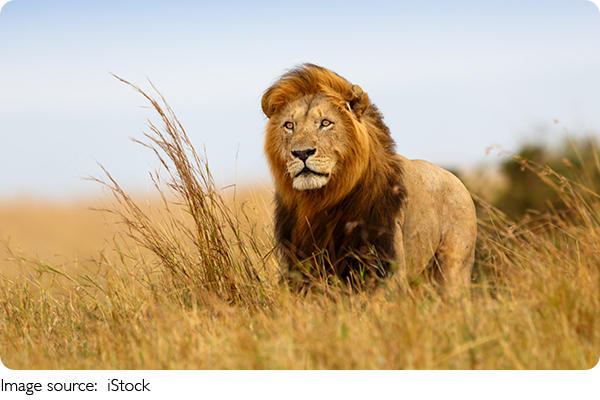
Hey Lykkers! A lion’s mane is one of the most recognizable features in the animal kingdom. Flowing around the head, neck, and shoulders, it gives male lions an imposing appearance that has inspired stories, symbols, and wildlife documentaries for centuries. Yet a mane is far more than decoration.
So, why do lions have manes in the first place? The answer involves competition, reproduction, communication, protection, and evolution.
A Mane Sends a Powerful Visual Message
For a male lion, appearance can influence how other lions respond to him. Lions live in social groups known as prides, and males may compete with rivals over territory and access to females. A large mane can make a male look bigger and more intimidating before a physical confrontation even begins.
A wounded lion may struggle to hunt, defend territory, or remain with a pride. If a formidable appearance causes a rival to back away rather than attack, the mane may provide an advantage without requiring a fight. The mane essentially works as a visual signal. Instead of immediately testing strength through combat, lions can gather information from physical characteristics first.
The Mane May Offer Some Protection
The thick hair around a male lion’s neck and head may also provide a degree of protection during confrontations. When rivals fight, bites and claw strikes can be directed toward the face, neck, and shoulders. A mane cannot stop a serious injury, and it should not be considered natural defense. However, the dense covering may make it more difficult for an opponent to reach the skin directly. The hair can also make the neck appear larger, potentially changing how an opponent approaches an attack.
Lionesses Notice Mane Characteristics
The mane also plays an important role in interactions between males and females. Lionesses can assess the appearance of males, and researchers have found evidence that mane characteristics influence their responses. A full, dark mane is commonly associated with mature males and can indicate that the individual has reached a certain stage of development. A healthy-looking mane may also provide information about the male’s condition.
This does not mean that females simply choose the male with the biggest mane. Lion social behavior is considerably more complex. Territory, experience, behavior, physical condition, and the ability to defend a pride can all influence which males remain successful. The mane is one visible piece of information within a much larger social system.
Why Are Some Manes Darker Than Others?
Male lions do not all develop identical manes. Some have relatively short, pale hair, while others grow thick, dark manes extending across the neck, chest, and shoulders. Age is one important factor. Young males generally begin developing their manes as they mature, with the hair becoming more noticeable over time. Hormones also contribute to this process, particularly testosterone, which influences the development of several male characteristics.
Why Would a Lion Need Such a Large Mane?
One major explanation involves competition between males. A large mane can exaggerate the apparent size of the head and neck, creating a more imposing silhouette. This matters because lions do not live in isolation. Male groups may challenge established males, attempt to take over prides, or defend territories from competitors. In such situations, visual intimidation can have value.
Researchers have also found associations between darker manes and indicators of maturity and condition. A dark, substantial mane may communicate that a male has reached an advanced stage of development and is capable of maintaining the costly feature. In that sense, the mane can function almost like a biological billboard, advertising information about its owner without making a sound.
A Mane Comes With a Cost
A spectacular mane also creates disadvantages. Dense hair can retain heat, which is particularly important for lions living in warm African environments. A heavily maned male may have more difficulty releasing excess body heat than one with a sparse mane. Growing and maintaining large amounts of hair also requires resources. The body must invest energy and nutrients into producing the mane, meaning that the feature is not completely free from physiological costs.
Climate Can Change Mane Development
Temperature appears to influence how large and dense a lion’s mane becomes. Males living in hotter areas often develop shorter or less luxuriant manes than those living in cooler environments. Climate is not the only explanation. Genetics, age, food availability, hormones, and individual condition can all affect mane growth. As a result, a lion with a smaller mane should not automatically be considered weaker or less healthy.
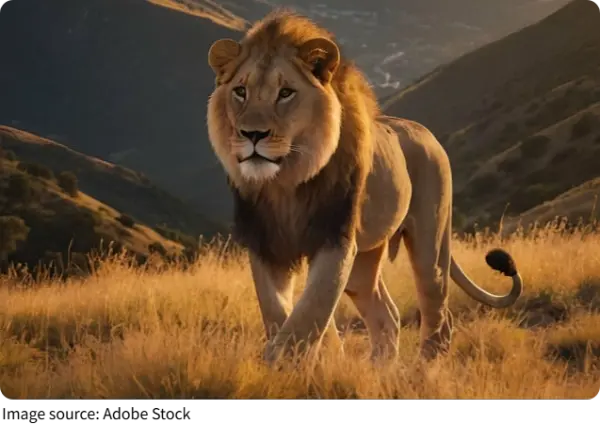
A lion’s mane represents a remarkable balance between advantages and disadvantages. The next time a male lion’s mane catches the eye, it is worth seeing beyond its dramatic appearance. That flowing hair is not merely a symbol of power—it is a living record of the forces that have shaped one of nature’s most recognizable predators.